Field notes · 10 Jul 2026
South Crete Jeep Safari: Where the Island Drops to the Libyan Sea
There is a moment on every one of these trips when the last north coast hotel disappears from the mirror and the road stops being a road. That is the point of a south Crete jeep safari. The north shore holds nearly all the island's resorts; the south, behind two mountain walls, holds monasteries at the end of dirt tracks, villages of a few dozen people, and coves you reach through gorges rather than car parks. A guided 4x4 day is the simplest legal and practical way over, since rental contracts typically exclude the unsealed tracks that make the crossing worthwhile. What follows is the essentials: the routes, the swims, the food, the costs and the honest downsides of a long mountain day.
Quick Summary
A south Crete jeep safari is a full-day guided 4x4 trip that starts on the busy north coast, crosses the mountains, and comes down on the empty side of the island, where gorges open onto the Libyan Sea. The established routes head for Agiofarago Gorge and Matala, Tripiti Beach through the Asterousia range, and Kavousi Gorge with the Richtra Waterfall, with a western option toward Preveli from Rethymno. Days run about 8 to 9 hours with hotel pickup, and the two south-coast and gorge safaris we list are €92 and €94 per adult. Bring closed shoes, swimwear and no plans for the evening.
Why the South Coast Feels Different
The south of Crete faces Africa across the Libyan Sea, and it looks the part: drier, steeper and far emptier than the north. The Asterousia Mountains run along this coast with barely a town on them, and access points are few, which is why day-trip crowds never really form. Where the north sells convenience, the south trades in distance. A monastery like Odigitria still reads as an outpost, and a beach like Tripiti stays quiet in August for the simple reason that getting there takes effort. On a safari, that effort is the guide's job. Yours is to hold your coffee through the switchbacks and decide which swim was better.
South Crete Jeep Safari Routes That Matter
Four itineraries cover most of what operators run to the south coast. All are full days, and all end with salt water.
Agiofarago Gorge and Matala
The classic. From the Heraklion side, the route passes the Odigitria Monastery before dropping to Agiofarago, a narrow gorge that funnels you on foot between rock walls until it opens, suddenly and theatrically, onto the sea. The walk is short and mostly flat, so it suits regular fitness levels. The day traditionally finishes at Matala, the cave-pocked beach town of 1960s fame. Reckon on a full day of about 9 hours.
Tripiti Beach Through the Asterousia
For maximum remoteness, this route crosses the Asterousia Mountains via villages like Agios Myronas and lands at Tripiti, a secluded beach under high cliffs with unusually clear water. There is no famous monument on this day; the landscape is the monument. It runs around 9 hours, and it is the one south-coast route on this list you can book directly — the Trypiti day is listed from about €92. The strongest pick for repeat visitors who think they have seen Crete.
Kavousi Gorge and the Richtra Waterfall
Starting near Viannos in the southeast, this quieter route threads through Kavousi Gorge to reach the small Richtra Waterfall, a rare sight on an island this dry. One operator brands it the secrets of south Crete, which overstates nothing. Reckon on about 8 hours in and out of the vehicle. If you are based further east, the bookable equivalent is the Sarakina Gorge safari out of Agios Nikolaos, a similar day threading a dramatic gorge below the mountains.
Preveli and Kourtaliotiko from Rethymno
The western way south runs out of Rethymno through the Kotsifou and Kourtaliotiko gorges, with waterfall viewpoints, a taverna lunch in a mountain village such as Asigonia, and a finale at Preveli Beach, where a palm forest lines the river mouth. A variant visits the Arkadi Monastery first and adds a hike into the palm forest itself. Some operators here include lunch and clean beach towels in the price, a detail worth checking everywhere else too. We cover this side in depth in our Preveli jeep safari guide.
The evening jeep is gone, and the late run is a quad now
There is no longer an evening jeep to trade this day for. The short Heraklion off-road loop that finished with a barbecue has been withdrawn, and nothing driven has replaced it: every jeep route we list is a daytime run, and none of them includes dinner of any kind. If you want to be off-road in the last hours of light, the format is now self-drive — both Malia quads sell a 16:00 to 20:00 departure, the evening ride from €147 and the day tour from €165, with the price covering the quad rather than a seat, a car licence required of whoever drives, and a gyros meal back at base at the end. The evening ride's published dates currently stop at the end of September, so check the calendar before you build a day around it. Either way it is a north-coast ride, a long way from the Libyan Sea.
South-coast safaris you can book
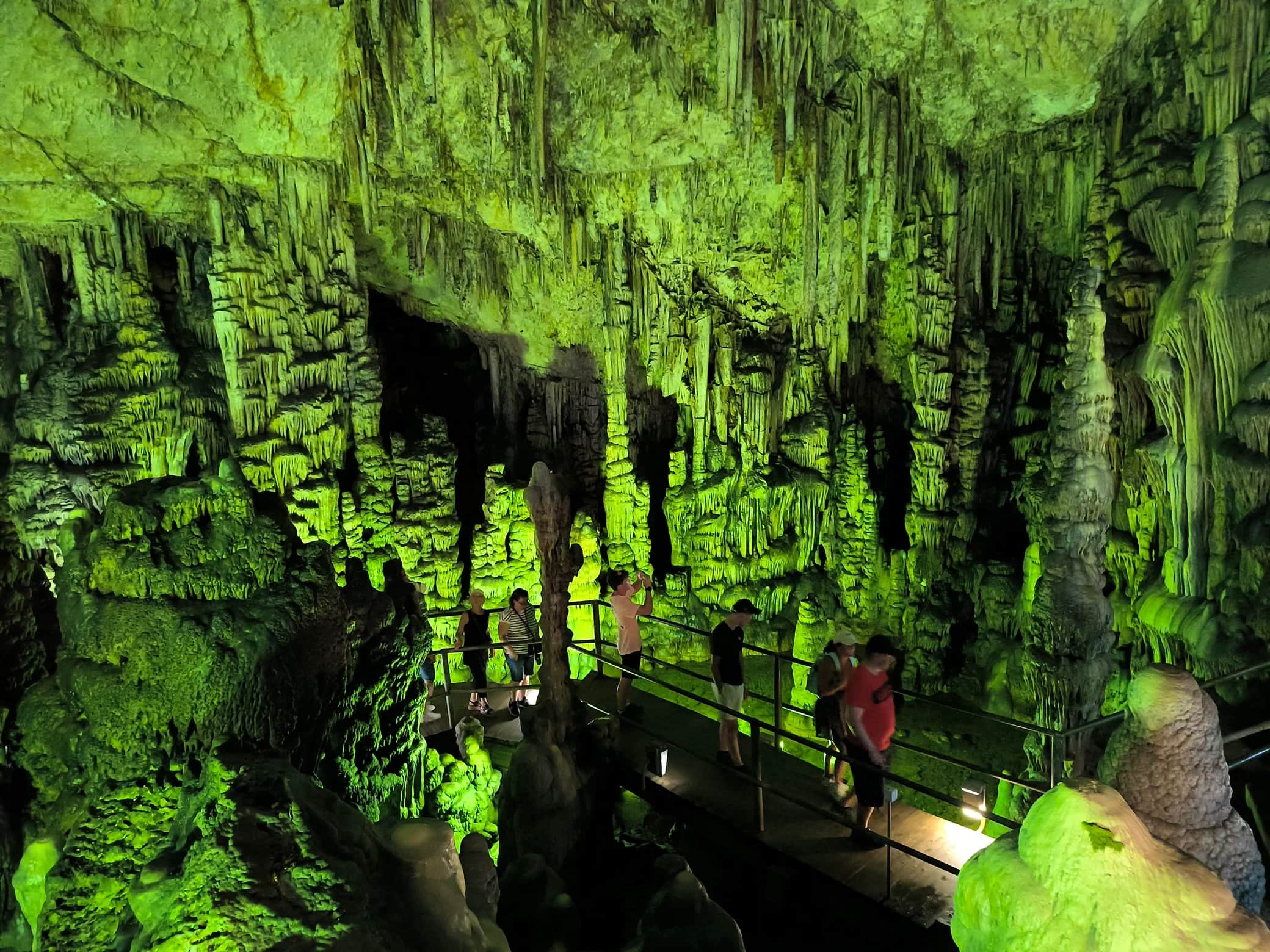
What the Day Actually Feels Like
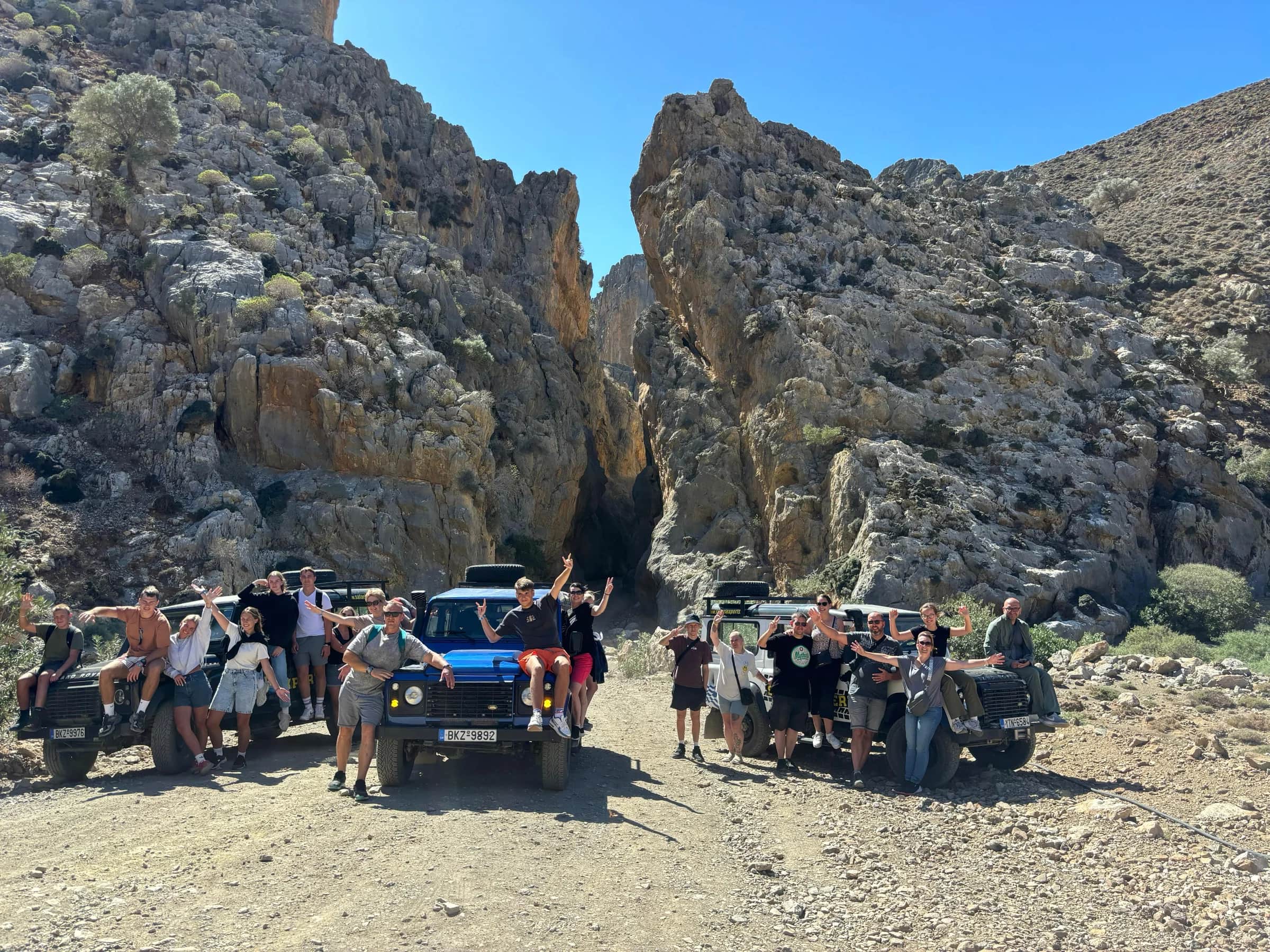
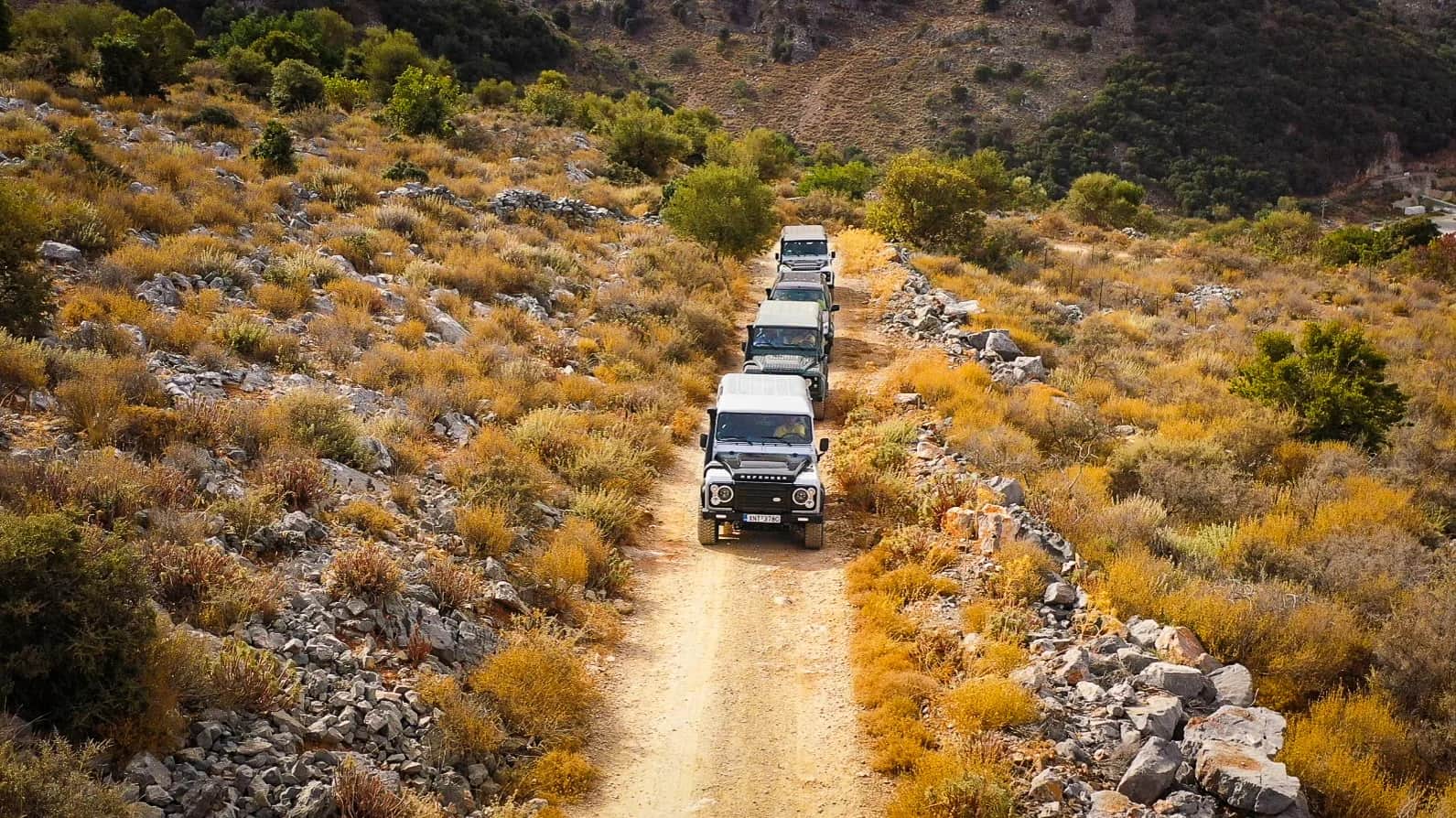
The vehicles set the tone. Operators on these routes run proper 4x4 machines, typically Toyota Land Cruisers carrying up to 6 passengers or Land Rovers with small groups of up to 7, driven by local professionals who have usually covered these tracks for years. You are a passenger on the standard tours, which stops feeling like a compromise about ten minutes into the first climb, when the track narrows and the drop on the passenger side gets interesting. The rhythm alternates driving and stopping: a viewpoint over the north coast you just left, a village where the guide seems to know everyone, the gorge walk, lunch, the beach, then the long golden drive back.
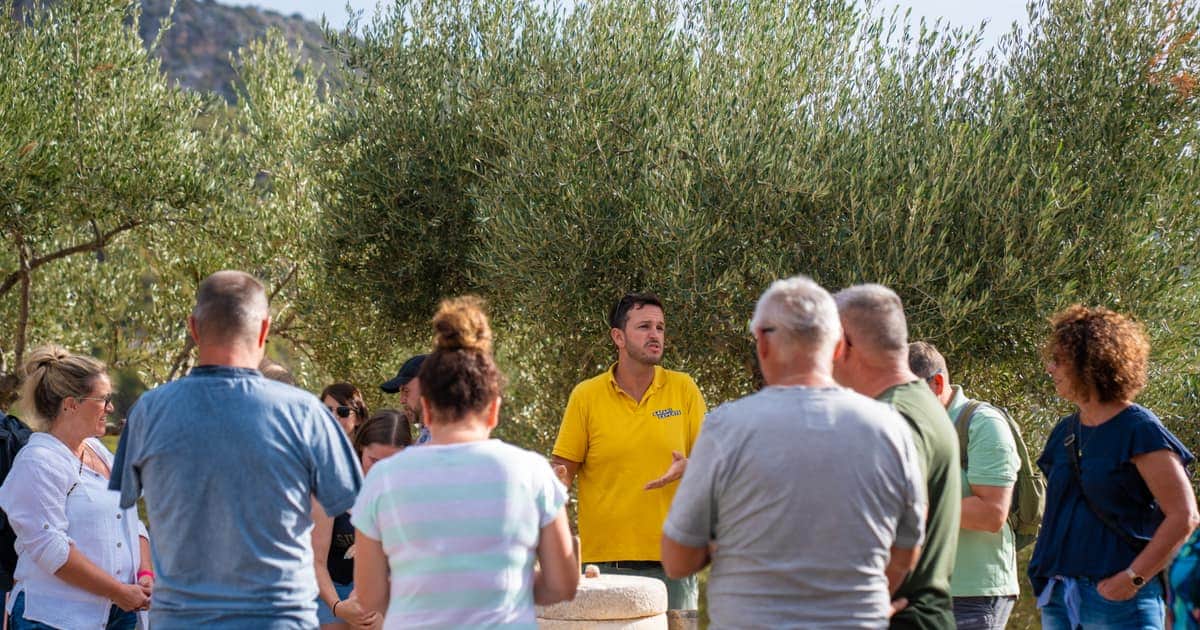
Expect dust in high summer, wind on the passes and a fine layer of the island on everything you brought. Expect, too, the specific pleasure of watching a landscape empty out as you go, until the only traffic is goats. The guiding is a large part of what you pay for: why the monastery stands where it stands, which herbs are in the hillside scent, when to be quiet and let the place speak.
Prices and What Is Included
South coast safaris are priced like the island's other full-day 4x4 routes. Of the two south-coast and gorge days we can actually book you onto, the Trypiti south-coast run is about €92 and the Agios Nikolaos gorge day €94 per adult; across all four jeep routes we list, the band is €89 to €94. Hotel pickup and drop-off, the driver-guide and the planned stops are standard inclusions. Lunch is included by some operators and paid locally with others, so read the listing carefully; the same applies to towels and any monastery or site entries. Private versions of these routes exist for groups who want their own vehicle, priced per jeep rather than per person, and many listings allow free cancellation up to 24 hours before departure, which is useful insurance in a place where you may simply change your mind about which coast to spend Tuesday on.
Swim Stops and the Libyan Sea
The swim is not a bonus on these routes; it is the destination. The Libyan Sea tends to be calm on summer mornings, clear over rock and pebble, and noticeably quieter than any organized beach on the north coast. At Agiofarago you swim below the cliffs where the gorge meets the water. At Tripiti the cove is hemmed in by rock, which keeps it sheltered. At Preveli the river meets the sea beside the palms, so you can rinse in fresh water after the salt. Pack swimwear worn under your clothes, sun protection and water shoes if you have them, since entries are pebbly. Towels are provided by some operators and not others.
Food and Tavernas
Lunch happens in the mountains, not on the beach, and that is the right way around. Village tavernas along these routes cook a short daily menu: goat or lamb done slowly, local cheese, garden vegetables, bread and oil from the hills you just crossed. On the Rethymno route the named lunch stop is Asigonia; the two self-drive Malia quads skip the taverna table and finish back at base with a gyros meal and a soft drink. Reviewers rate the meals as highly as the views, and the farm-to-table line here is a description rather than a slogan. Mention dietary needs when you book, because a kitchen cooking for one safari group has no plan B on the day.
Weather and Best Time
The south coast season is long. Spring turns the mountain sections green and keeps walking temperatures kind, while the sea is still cool. High summer guarantees the swim but brings heat and dust on the tracks, so drink more water than feels necessary and wear sunglasses for the open-vehicle stretches. September and October are the local favorite: the Libyan Sea holds its warmth, light softens, and villages exhale after August. Up on the passes it can blow cold at any month, so a light layer earns its space in your bag. If your dates are flexible, aim for shoulder season; if not, every month in the main season works, just differently.
Getting There and Pickup
These are pickup-based tours. Operators collect from hotels and villas across the north coast bases, including Heraklion, Hersonissos, Malia, Gouves, Agios Nikolaos and, for the western route, Rethymno and Georgioupoli. You book a date, give your accommodation, and a 4x4 appears at breakfast time; you are returned to the same spot around dinner. There is no version of this day where you meet the group in the mountains with your rental car, and that is deliberate: the crossing is the product. Departures leave early, usually around breakfast time, because the distances are real; the operator confirms your exact pickup slot the evening before, so keep an eye on messages after you book. If your accommodation sits outside the listed zones, ask for a meeting point rather than assuming you are excluded — our by-area guide to where each safari leaves from shows which routes reach which resorts.
How to Choose
Choose by starting point first: Heraklion-side stays fit Agiofarago, Tripiti and Kavousi, while Rethymno stays fit Preveli. Then choose by appetite. First-time visitors get the most from Agiofarago and Matala, which mixes a gorge walk, a monastery and a famous beach. Travelers chasing solitude should take Tripiti or Kavousi. Anyone building the day around lunch and waterfalls should go west to Preveli. Families are fine on all of them, since operators run these routes for all ages, but the Asterousia crossing involves the most bouncing, so very small children ride easier on the Preveli day — our guide to which safaris suit families weighs this up honestly. If you want the mountains without the rough south crossing at all, the gentler Lasithi Plateau jeep safari climbs to a green farming plateau instead. Groups who want their own vehicle can book private, and confident drivers can take a self-drive convoy where one is offered.
Common Mistakes to Avoid
Do not treat the day as a beach trip with a transfer. Most of it is mountain driving and stops; the swim is one glorious hour, not four. Do not wear sandals: gorge floors and village lanes are stone, and closed shoes save the day. Do not book by price alone, because a cheaper listing without lunch can cost more than a dearer one with it. Do not skip the water bottle, especially in July and August when dust and heat stack up. And do not plan an early start for the next morning; after 9 hours of tracks and sun, the correct next activity is a slow breakfast.
Where to Stay
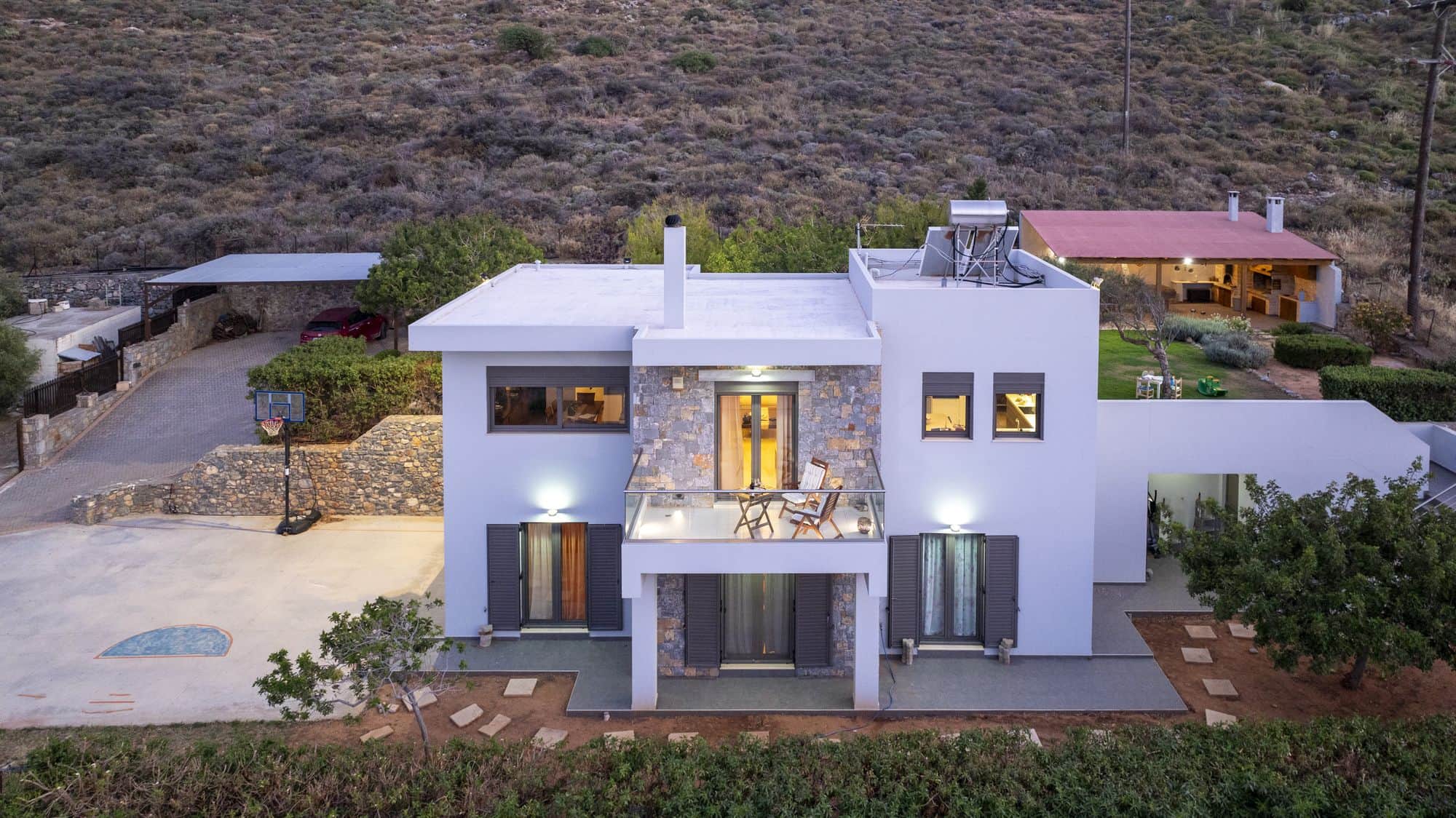
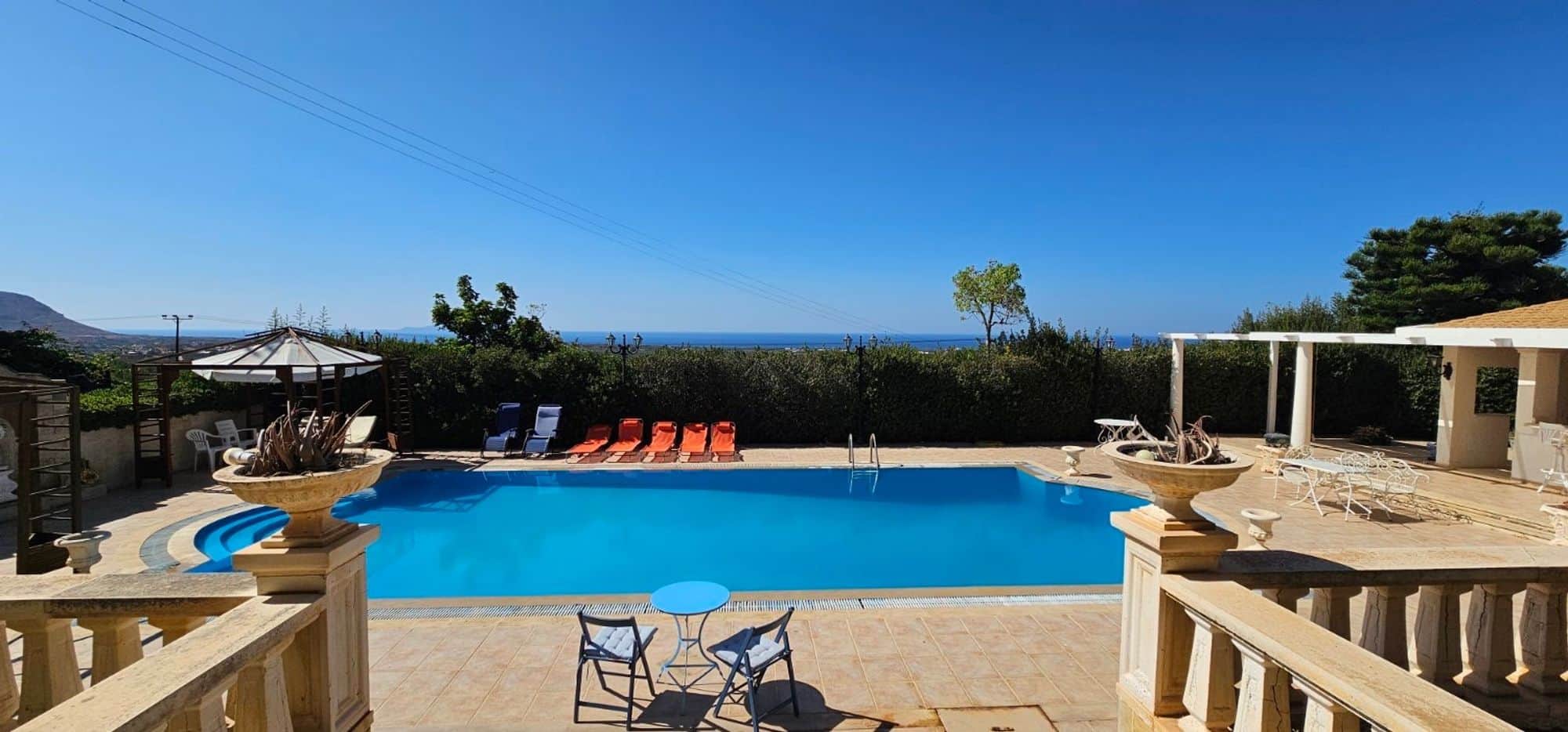
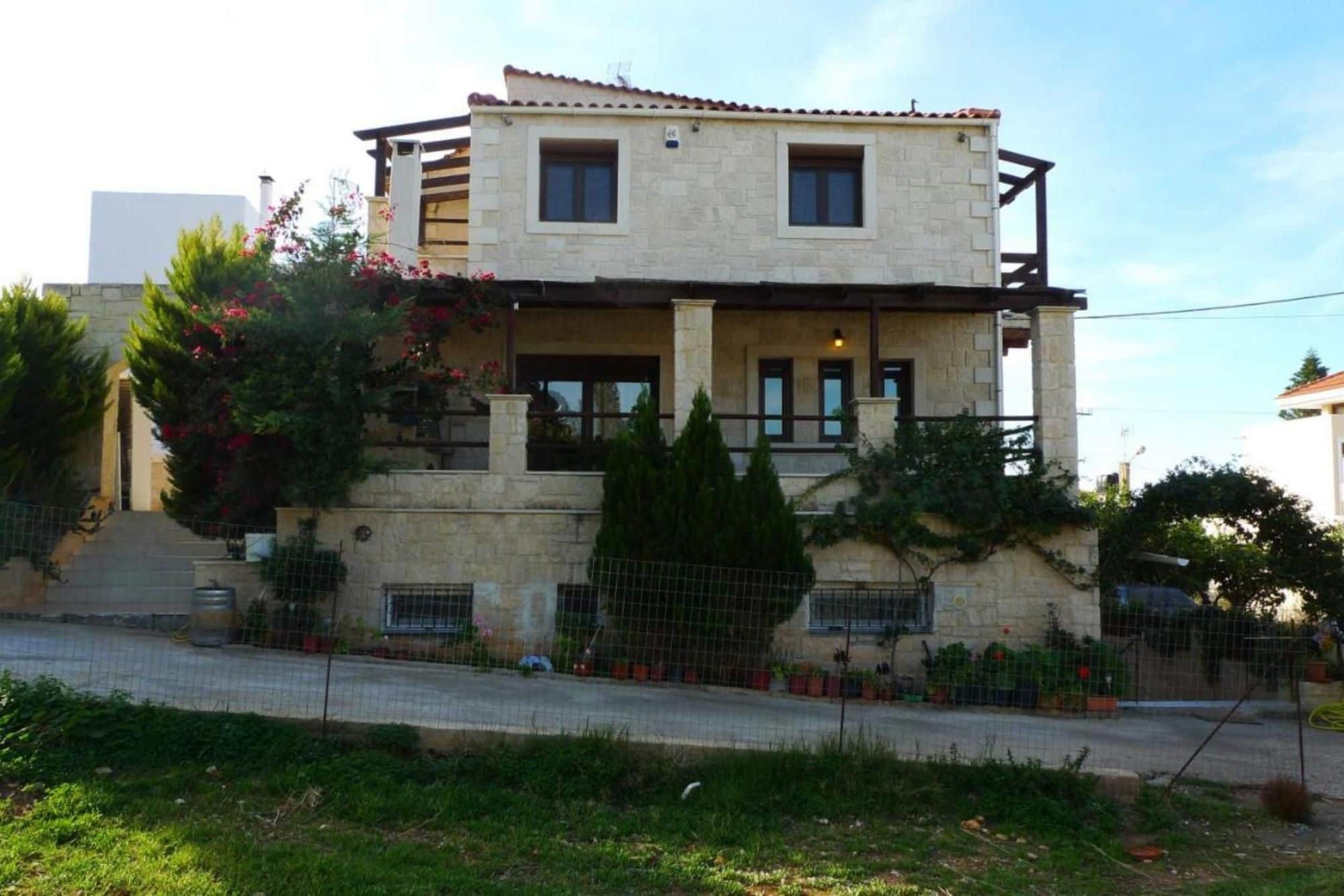
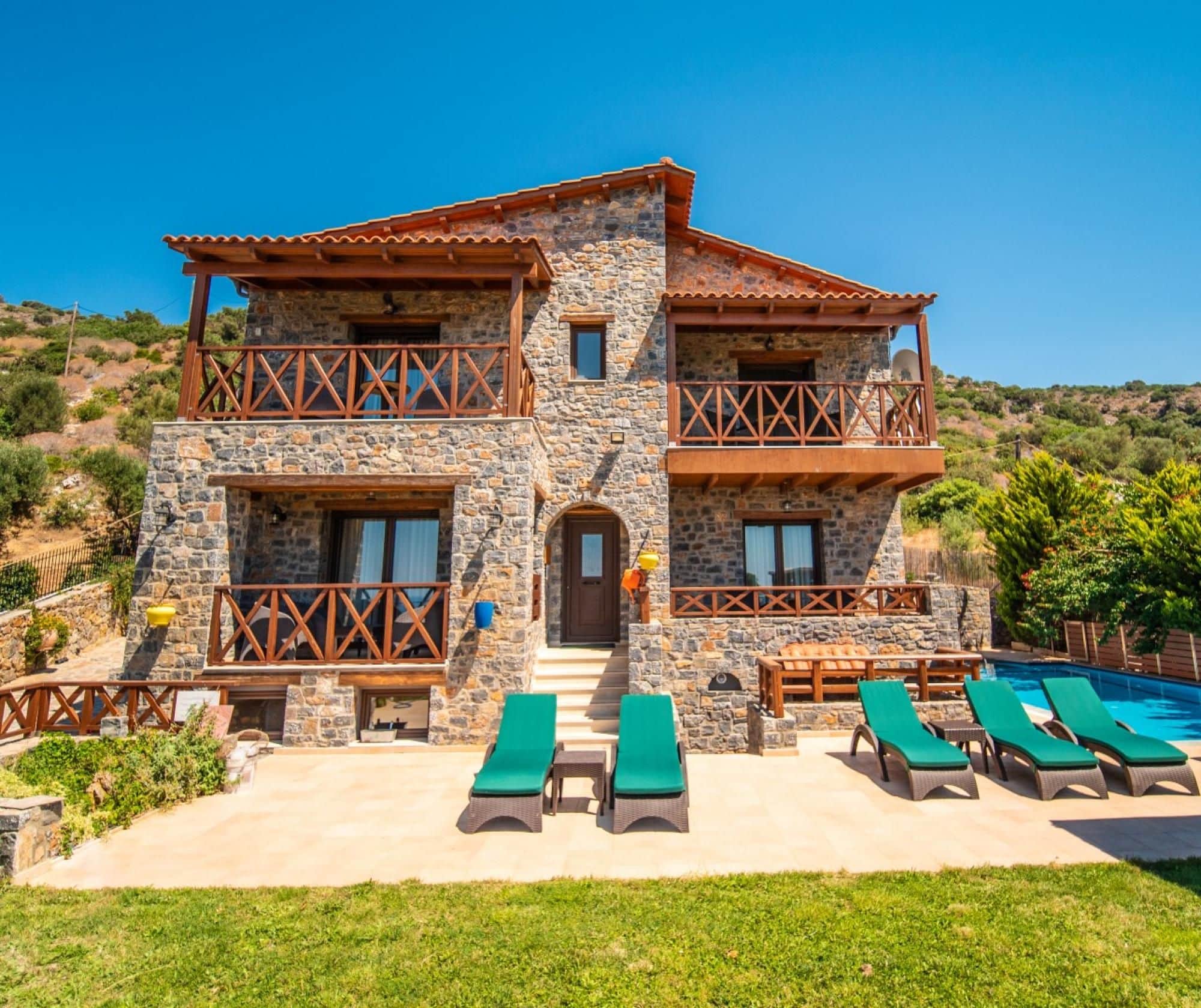
You do not need to sleep in the south to see it this way; the safaris are built to start from the north. A base around Heraklion or the eastern resorts opens the three eastern routes, while Rethymno anchors the Preveli day. If quiet evenings matter more than resort strips, a villa in the countryside behind the north coast pairs naturally with this kind of day: space for sandy shoes, a pool to fall into and no schedule but the pickup time. My Creta Villa — our own villa company — lists countryside and coastal villas around Heraklion and eastern Crete, within easy reach of the northern pickup points.
Villas near the northern safari bases
My Creta Villa — our own villa company
Final Thoughts
The south coast is the version of Crete that photographs never quite prepare you for, precisely because so few people go and see it. One booked day, one mountain crossing and one cold swim later, you will understand why the guides who run these routes tend to be the least bored drivers on the island. For how the south stacks up against the island's other 4x4 days, our overview of the best safaris in Crete ranks the lot. Pick the route that matches your base and your appetite for remoteness, check what the price includes, and let someone who knows every stone of the track do the hard part.
South Crete jeep safari: frequently asked questions
What is a south Crete jeep safari?
It is a full-day guided 4x4 trip that crosses the mountains from the north coast to the empty south, where gorges open onto the Libyan Sea. The crossing itself — villages, viewpoints and off-road tracks — is as much the point as the beach at the end.
How long is the day and what does it cost?
Most run about 8 to 9 hours with hotel pickup. The two south-coast and gorge days we list are the Trypiti south-coast run from about €92 and the Agios Nikolaos gorge safari from €94; across all four jeep routes we list, the band is €89 to €94 per adult. Check whether lunch and towels are included, as that is where similar-looking tours differ.
Is there a sunset or barbecue jeep safari?
Not any more. The short evening 4x4 out of Heraklion that finished with a barbecue has been withdrawn, and every jeep route we list now is a daytime run with no dinner included. The only off-road that still goes out in the late afternoon is self-drive: both Malia quads sell a 16:00 to 20:00 departure, from €147 and €165 for the quad, which covers a driver and one passenger rather than a seat each.
Which route is best for a first visit?
Agiofarago and Matala, from the Heraklion side. It mixes a short gorge walk, the Odigitria Monastery and the famous cave-pocked beach at Matala, so it packs the most variety into one day for a first-timer.
Can I actually swim in the Libyan Sea?
Yes — the swim is the destination, not an add-on. Routes finish at coves like Agiofarago, Tripiti or Preveli, which are calm on summer mornings and far quieter than the north-coast beaches. Wear swimwear under your clothes and bring water shoes, since entries are pebbly.
Is it suitable for families and small children?
Operators run these routes for all ages, but the Asterousia crossing to Tripiti is the bounciest. Very small children ride easier on the Preveli day, which is gentler underfoot. For a soft-option mountain day with no rough tracks, the Lasithi Plateau safari is easier still.
What should I bring?
Closed shoes for stony gorge floors and village lanes, swimwear worn under your clothes, a towel unless the operator supplies one, sun protection, a hat, plenty of water, and a light layer for the cold mountain passes.